What happens if you forget to change your HVAC filter? The consequences can range from higher energy bills and reduced airflow to serious system problems like a frozen evaporator coil or even a cracked heat exchanger. In short, skipping a $20 filter replacement could end up leading to a $5,000 repair.
In this blog, Thiele Heating & Air Conditioning shares more about what can go wrong, how often you should replace your air filter, and how we can help you stay on top of this simple but massively important task.
5 Things That Happen If You Don’t Change Your Air Filter
Most residential systems use a furnace and central air conditioner that share the same filter, typically located in a return vent or inside the air handler near the blower compartment. That single filter supports both your heating system and your cooling system. It’s designed to trap dust, fine particulates, and other harmful particles—but it’s not meant to last forever. Over time, it fills up with debris, which reduces the filter’s ability to do its job.
Here’s more about the effects of not changing air filter systems as frequently as you should.
1. Poor Indoor Air Quality
A dirty air filter can only hold a significant amount of dust and debris before it stops working effectively. Once it’s overloaded, the filter’s ability to trap fine particulates like pollen, pet dander, and dust drops sharply. Instead of catching those harmful particles, the old filter allows them to pass through and circulate into your duct system and back into the rooms you use every day. That’s when you start noticing more dust buildup, stale air, and worsening allergy symptoms.
A clean filter restores proper filtration and keeps airborne pollutants from constantly cycling through your home.
2. Weak Airflow and Uneven Temperatures
When debris builds up, it begins to block airflow moving through the system. Both your heating system and cooling system rely on steady airflow to distribute conditioned air evenly. If a dirty filter restricts that flow, certain rooms may feel warmer or cooler than others, and vents may barely push air at all. Your air conditioner may run longer just to try to keep up.
Replacing the old filter allows air to move freely again and helps restore proper system performance.
3. Higher Energy Bills
One of the most noticeable answers to what happens if you don’t change your furnace filter is that energy bills increase. When airflow is restricted, the system uses more energy because it has to run longer cycles to maintain the set temperature. That added runtime directly impacts energy costs month after month. The blower motor works harder, pulling more electricity just to push air through the clogged filter.
Changing the filter regularly is one of the simplest ways to lower energy bills without making any other upgrades.
4. Extra Strain on Delicate Components
When a dirty air filter continues to block airflow, internal parts work harder than they should. Delicate components like the blower motor, compressor, and heat exchanger experience added strain. Over time, that stress can shorten equipment life and lead to costly repairs.
Clean filters reduce wear and protect the system from unnecessary damage.
5. Complete System Breakdowns
Restricted airflow doesn’t just hurt energy efficiency—it can create serious mechanical problems. In a cooling system, low airflow across the evaporator coil can cause condensation to freeze, eventually forming ice that blocks cooling entirely. In a heating system, trapped heat can cause overheating and automatic shutdowns. A clogged air filter can lead to major system damage if ignored.
Keeping a clean filter in place protects the entire system from avoidable failures.
Never forget a filter change again! Join Thiele’s Annual Rewards Service Program! We handle your seasonal maintenance and safety checks so you can relax knowing your system is running safely.
How Often Should I Change My Air Filter?
So, when are new air filters needed? It’s one of the most common questions we get, and a good one! The right schedule for air filter replacement depends on your home, your HVAC system, and how much daily use it sees.
Filters don’t last forever, and as we just covered, what happens if you don’t change your furnace filter isn’t good. Not changing your filters on time can lead to airflow problems, rising energy bills, indoor air quality issues, and a total system failure. The key is to check and change the filter regularly so buildup never gets out of hand. Here’s an easy guide to follow on when to replace furnace filters:
- Every 1–2 months if you have pets, allergies, or anyone in the home with respiratory concerns. Pet hair and dander can clog a filter quickly, making frequent air filter checks especially important.
- Every 90 days for the average household without pets or allergy concerns. This works well for most standard pleated filters.
- Every 30–45 days during peak summer and winter when your system runs more often. Heavy use means filters fill up faster.
- Every month if you’re using basic fiberglass filters or have a larger household. Lower-cost filters trap less and clog more quickly.
- Every 6–12 months for certain high-efficiency or manufacturer-specific filters—but always follow the product label to avoid waiting too long.
No matter what type of system you have, staying consistent with air filter replacement is one of the simplest ways to protect performance and prevent larger problems. When in doubt, pull the filter out and take a look. If it appears gray, clogged, or dusty, it’s time to change filters and put a fresh one in.
Your HVAC Air Filter Options (And How to Choose the Right One)
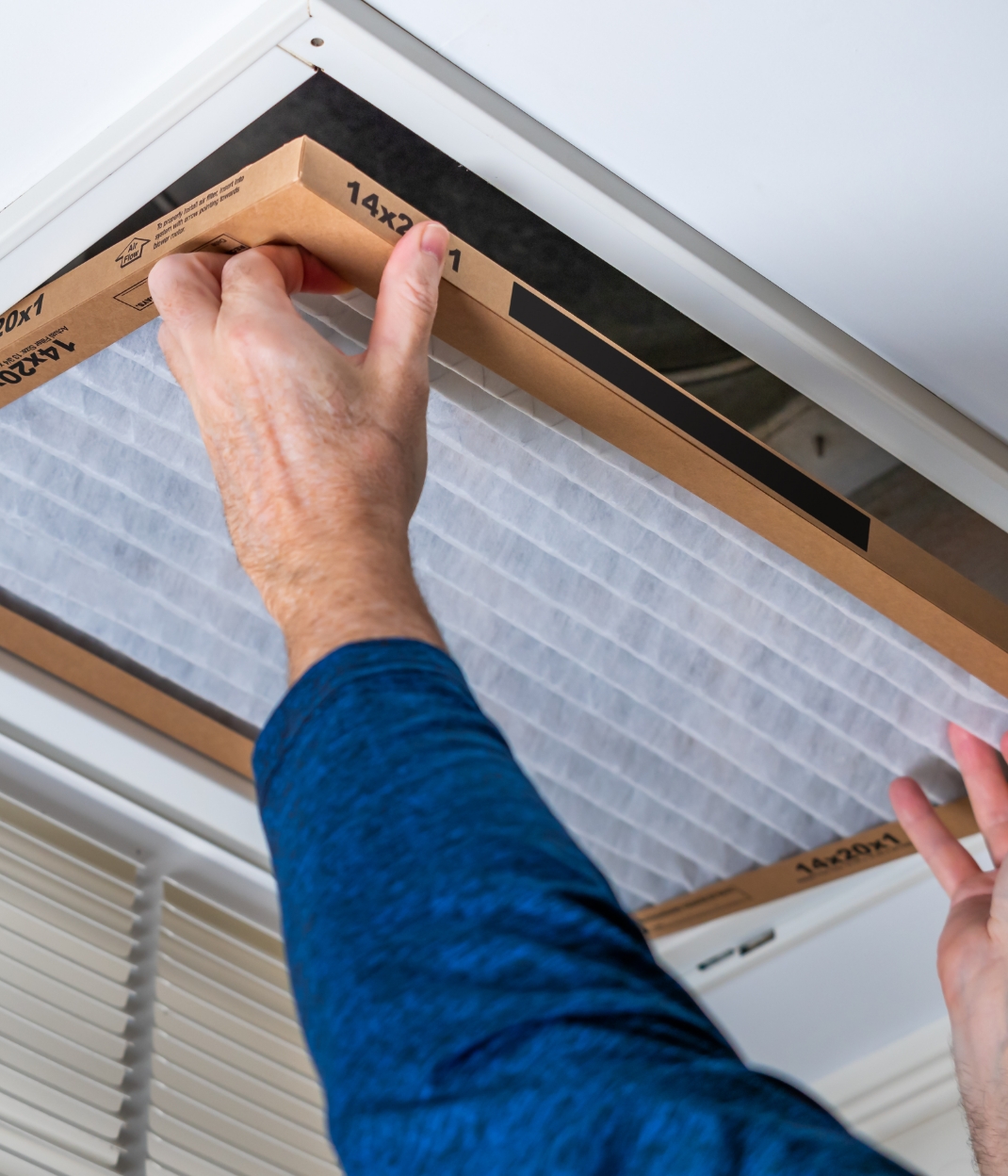
Air filters come in different sizes and styles, and not all filters are created equal. Before picking up a new filter from the hardware store or online, take a look at your existing filter. The size is printed on the frame, and that’s what needs to match your system and the filter compartment.
One of the most important things to understand is the MERV rating. MERV stands for Minimum Efficiency Reporting Value and measures how well a filter captures particles like dust, mold spores, and pet dander. Higher MERV ratings trap smaller particles, but they can also restrict airflow if your system isn’t built for them. Installing a filter that’s too restrictive can cause performance problems, so matching the filter to your equipment matters.
Here’s a quick breakdown of some common air filter options:
Fiberglass Filters
These are basic disposable filters and are typically the most budget-friendly option. They usually have a MERV rating around 4 and are designed to catch larger debris like dust and lint. They’re best for homes without allergy concerns and need to be replaced every 30–60 days.
Pleated Filters
Pleated filters offer better filtration because of their larger surface area. With MERV ratings typically between 5–8, they capture smaller particles like pollen and dust mites. Most last 60–90 days, depending on system usage and household conditions.
Electrostatic Filters
These can be reusable or disposable, depending on the model. They use static electricity to attract and trap particles and usually have MERV ratings around 8. They’re a good option for homes with pets, but reusable versions must be cleaned regularly to stay effective.
HEPA Filters
HEPA filters provide high-efficiency filtration with very high MERV ratings. They can capture up to 99.97% of very small pollutants, but not every HVAC system can support them without modifications. Always verify compatibility before installing one.
If you’re unsure which new filter is right for your system or whether your existing filter is the best choice, contact Thiele. We’ll help you select the best filter for your needs and show you how to keep it maintained.
Contact Thiele for Your Home’s Heating, Cooling, and Indoor Air Quality Needs
Since 1883, Thiele Heating & Air Conditioning has been serving homes across Central Indiana with expert HVAC services. From air conditioning installation to seasonal maintenance and air quality testing, we’re here to keep your system running strong and your air clean.
We offer a variety of indoor air quality solutions, including air purifiers, humidifiers, and air cleaners to help you breathe easier and stay healthier year-round. Our NATE-certified technicians install, repair, and maintain HVAC systems of all types and brands—and we’re happy to answer your questions along the way!
Want to take air filter maintenance off your to-do list for good? Join our Annual “Rewards” Service Agreement Maintenance Program and enjoy:
- Seasonal HVAC tune-ups (spring and fall)
- 15% discount on parts and repairs
- Priority service when you need it most
We check your filter, inspect your system, and keep everything running as it should so you can focus on everything else. Clean air, better airflow, fewer breakdowns: that’s the Thiele difference.
Interested in an indoor air quality service or an HVAC maintenance appointment in the Indianapolis area? Call Thiele Heating & Air Conditioning today or request service online. Let’s take great care of your home together.